
Setting Boundaries in Your Rainbow Pregnancy Support System
Have you ever noticed how the word “boundaries” can make people uncomfortable? Even when we desperately need them?
I remember sitting with my therapist during my rainbow pregnancy, trying to explain why every well-meaning check-in felt overwhelming.
“It sounds like you need some boundaries,” she said gently. And honestly? The suggestion made me feel guilty. These people cared about me. They were trying to help. How could I set boundaries with people who loved me?
Many cultures, including the Western one I grew up in, teach women they need to be everything for everybody.
The reason there are so many influencers on social media telling women/moms we “can’t pour from an empty cup” is that our society raised us to feel guilty about having anything in that cup in the first place.
In order to keep anything in your own cup, you need boundaries.
But boundaries aren’t walls we build to keep people out. They’re more like care instructions we provide to help people love us better, to love us in the way we want to be loved.
During pregnancy after loss, these care instructions become especially important. The emotional complexity of carrying hope and fear simultaneously creates unique needs that even our most loving supporters might not instinctively understand.
So let’s get into boundaries and how they come into play with your rainbow pregnancy support structure.
Table of Contents
A Disclaimer or Two
Before we move on I want to state VERY CLEARLY that I am neither a Medical Health Care Provider nor a Mental Health Care Provider. Nothing I write here should be taken as medical advice. I am simply here to share my own experiences in the hope it will help someone feel less alone, and possibly avoid some of the mistakes I made along the way.
If you have any questions or concerns about your pregnancy or your emotional state, PLEASE seek help from a professional.
One other thing I want to be clear about from the start: boundaries aren’t about becoming so skilled at communication that you can make any relationship work.
Sometimes, the most loving thing you can do for yourself is to recognize when a support relationship consistently leaves you feeling worse, not better.
The boundary strategies we’ll explore in this post are tools for relationships where you have reason to believe the other person cares about your well-being but just doesn’t know how to show it effectively.
But if someone repeatedly makes your pregnancy more stressful despite clear communication? That’s valuable information about their capacity to support you right now.
You’re not required to exhaust yourself trying to teach people how to care for you properly. Your emotional energy is limited and precious during this vulnerable time—it’s okay to save it for relationships that actually nourish you.
The goal of boundaries is to create the emotional safety you need, not “fix” difficult people, and sometimes that means choosing who gets access to your heart during this tender time, and who doesn’t.

Understanding Boundaries as Part of Support
One of the biggest misconceptions about boundaries is that they create distance in relationships. In reality, clear boundaries often make deeper connection possible.
Think about it this way: when your supporters know exactly how to help you feel safe and supported, they can show up more confidently. When you’re clear about what you need (and what you don’t), both of you can relax into the relationship.
During my rainbow pregnancy, I was honestly a mess most of the time. I didn’t have clear boundaries because even I didn’t know what I needed from one day to the next.
Sometimes I desperately wanted my mom to ask about the pregnancy, other times the same question would send me into a spiral. My partner never knew if sharing hopeful thoughts would comfort me or feel like tempting fate.
What I wish I had known then is that boundaries don’t have to be perfectly clear from the start. Sometimes they’re more like experiments: “I think I need this right now, but I might need to adjust it later.”
Why Pregnancy After Loss Creates Unique Boundary Needs
Pregnancy after loss operates in a space that most people haven’t experienced—possibly including you, if this is your first rainbow pregnancy. You might find yourself surprised by needing:
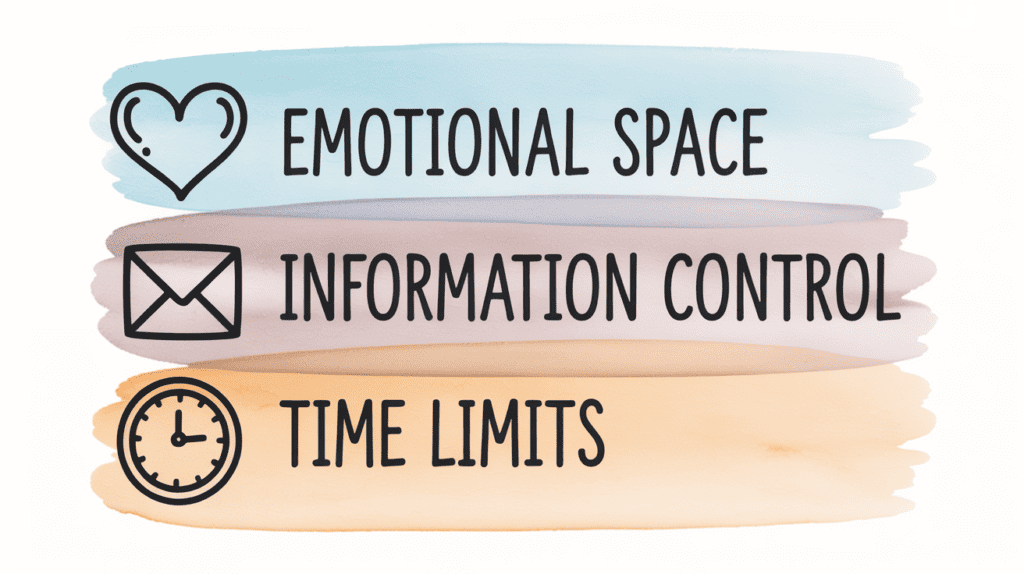
- Emotional space to process feelings that change from day to day (or hour to hour)
- Information control over who knows what and when, even when you can’t explain why
- Physical boundaries around touch that feel different than they used to
- Conversation limits about topics that unexpectedly become overwhelming
- Time boundaries around when you can handle support (which might be unpredictable)
- Energy protection from managing emotions you didn’t know you’d have
These are normal responses to carrying an emotional complexity that’s hard to predict or explain, even to yourself.
There is no particular way you should be feeling or should be handling things right now.
For more about how you are feeling and why, see:
➡️ Emotional Response Patterns in Rainbow Pregnancy: Why You Feel the Way You Do
➡️ Understanding and Managing Emotional Disconnect in Rainbow Pregnancy
➡️ Understanding the Preparation Paradox in Rainbow Pregnancy
The Difference Between Protective Boundaries and Isolation
One thing that confused me during my rainbow pregnancy was wondering if my need for space meant I was isolating myself in unhealthy ways. Looking back, I can see there’s an important distinction:
Isolation happens when you cut off connection entirely because everything feels overwhelming, often leaving you without support when you desperately need it.
Protective boundaries are when you try to create conditions that make connection feel safer, even if you’re not sure exactly what those conditions are yet.
The goal isn’t to need less support—it’s to find ways to receive support that don’t leave you feeling more overwhelmed than before.

Struggling to figure out what kind of support you need during your rainbow pregnancy? My free Rainbow Pregnancy Support Quiz can help. It walks you through how to:
✔️Discover your unique support style and preferences
✔️Identify specific types of help that would feel most valuable
✔️Create clarity around your needs without emotional overwhelm
Common Boundary Challenges in Rainbow Pregnancy Support (And How to Navigate Them)
Before we talk about specific boundary strategies, let’s acknowledge some of the particular challenges that come up during pregnancy after loss—along with gentle ways to work through them.
If any of these situations sound familiar, know that they’re common and manageable with the right approach.
When Supporters Have Different Comfort Levels with Your Emotions
Maybe your support person gets uncomfortable when you express fear or sadness and tries to redirect you toward hope or positivity.

Or perhaps they’re comfortable with your difficult emotions but panic when you express cautious optimism, worried that encouraging hope might set you up for disappointment.
What you can try: Let them know that all your emotions are valid parts of your experience right now. You might say, “I need you to be okay with me feeling scared sometimes, even when you want me to feel hopeful. Both feelings can exist at the same time.”
If they continue struggling with certain emotions, consider having different supporters for different types of conversations, working with people’s natural comfort zones.
It’s also not uncommon to feel like support isn’t even an option because part of you is still in denial. That’s exactly what I explored in Asking for Rainbow Pregnancy Help When You’re Still in Denial—how not recognizing your own needs can make it feel impossible to ask for what feels safe.

Managing Information Sharing Across Your Support Network
You might want to share different levels of information with different supporters, but then feel confused or guilty when they compare notes or when someone shares more than you intended.
What you can try: Be specific about what information can be shared and with whom. You might say, “I’m sharing this with you, but I’d like to keep it between us for now” or “Feel free to share this update with [specific people], but please check with me before telling anyone else.”
Consider designating one person as your “information coordinator” if managing multiple supporters feels overwhelming.
Dealing with Supporters Who Want to “Fix” Your Feelings
Some supporters immediately want to problem-solve or offer solutions when you express difficult emotions. While this comes from caring, it can feel invalidating when what you really need is just to be heard.

What you can try: Help them understand their role by being specific about what you need.
You might say, “I’m not looking for solutions right now—I just need you to listen and remind me that these feelings make sense” or “Could you help me feel less alone with this feeling instead of trying to change it?”
Some of the hardest boundary challenges come when people assume they’re part of your support circle without being invited—or when they push their version of ‘help’ even after you’ve asked them not to.
If you’re facing that kind of dynamic, this post on managing unwanted and pushy support during rainbow pregnancy offers clear strategies (and scripts) for protecting your energy without burning bridges unnecessarily.
Navigating Family Dynamics and Expectations
Family relationships often come with existing patterns that might not fit your current needs. Maybe your family has always shared everything, but now you need more privacy. Or they expect you to participate in gatherings the same way you always have.
What you can try: Acknowledge the change while explaining your needs: “I know our family usually shares everything, and I love how close we are. Right now, I need to handle pregnancy information differently because of how vulnerable this feels after our loss.”

Balancing Gratitude with Self-Protection
One of the trickiest challenges is the internal struggle between feeling grateful for support and protecting your emotional well-being. You might think, “They’re being so kind—I shouldn’t need boundaries.”
What you can try: Remember that boundaries actually help people support you better. You can be grateful for their care while still needing it delivered in specific ways. Think of it as giving them better directions for how to help you.
If you’re bumping up against support that feels more harmful than helpful—even when it’s well-meant—I shared more about this in When Rainbow Pregnancy Support Isn’t Supportive. You’re not imagining it, and there are ways to manage it.
Types of Boundaries in Support Relationships
Understanding different types of boundaries can help you identify exactly what you need and communicate it more clearly to your supporters. There are a lot of examples below that are just that, examples.
If you see anything below that seems absolutely opposite to how you are feeling, these examples are not here to tell you they are wrong; they are only here to illustrate what I mean.
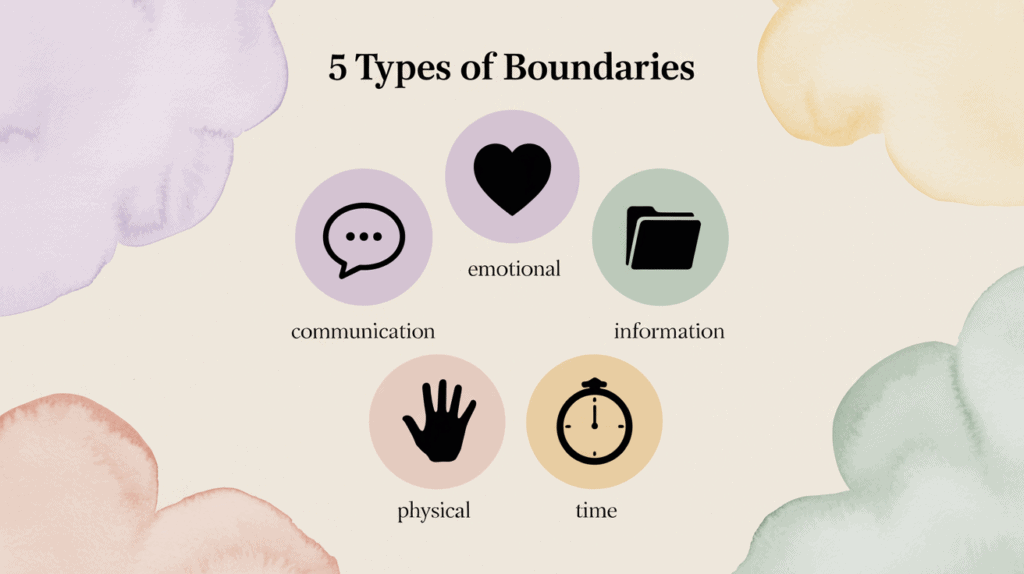
Communication Boundaries
These involve when, how, and what you discuss:
- Timing boundaries: “I prefer not to talk about pregnancy stuff in the evenings when I’m trying to wind down”
- Topic boundaries: “I’m not ready to discuss birth plans yet, but I appreciate you thinking ahead”
- Method boundaries: “Text messages work better for me than phone calls right now”
- Frequency boundaries: “I love that you care, but daily check-ins feel overwhelming. Could we try weekly instead?”
Emotional Boundaries
These protect your emotional energy and processing space:
- Feeling ownership: “These are my feelings to process—I need you to listen rather than try to change how I feel”
- Emotional labor limits: “I don’t have the energy to manage your worries about my pregnancy right now”
- Processing space: “I need some time to think through this before discussing it”
- Validation needs: “I need you to acknowledge that my fears are understandable, even if you don’t share them”
Studies show that parents navigating pregnancy after loss often experience heightened emotional demands from their support network, which can deepen stress without strong boundaries.
For research on how loss affects parental support dynamics, see this study on trauma and parenting dynamics in rainbow pregnancies.
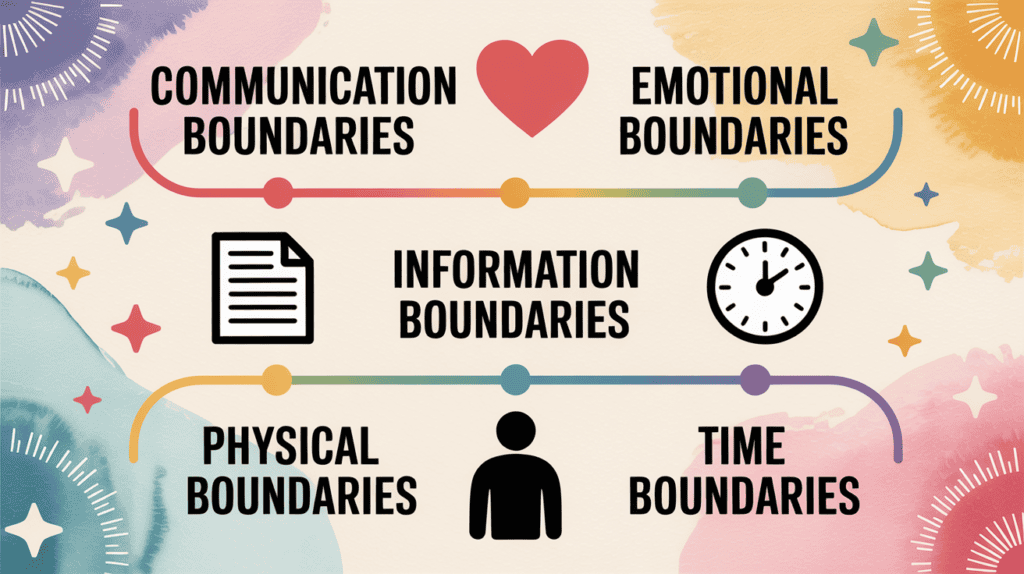
Information Boundaries
These control what information you share and with whom:
- Privacy levels: “I’m comfortable sharing that I’m pregnant, but not details about my medical care”
- Sharing restrictions: “Please don’t share updates about my pregnancy with anyone else without asking first”
- Medical privacy: “I’m keeping appointment details private right now”
- Social media boundaries: “I’m not ready for any pregnancy announcements on social media yet”
If you’re still figuring out who belongs in your inner circle and how to set up those initial roles and expectations, these posts offer a gentle step-by-step way to start:
➡️ Creating Your Rainbow Pregnancy Support Circle
➡️ Finding Your Initial Support Person for Rainbow Pregnancy
Physical Boundaries
These protect your physical space and comfort:
- Touch boundaries: “I’m not comfortable with belly touching right now”
- Space boundaries: “I need some physical space when we’re talking about emotional topics”
- Presence boundaries: “I’d prefer to go to appointments alone for now”
- Energy boundaries: “I need to limit social gatherings to conserve my energy”
Time Boundaries
These protect your schedule and availability:
- Response time expectations: “I might not respond to messages immediately, and that’s okay”
- Availability windows: “I’m most able to talk about pregnancy stuff in the morning when my energy is higher”
- Commitment limits: “I can’t commit to regular plans too far in advance because I don’t know how I’ll feel”
- Emergency protocols: “Here’s when it’s okay to call/text urgently, and here’s when it’s not”
Scripts and Strategies for Different Support Relationships
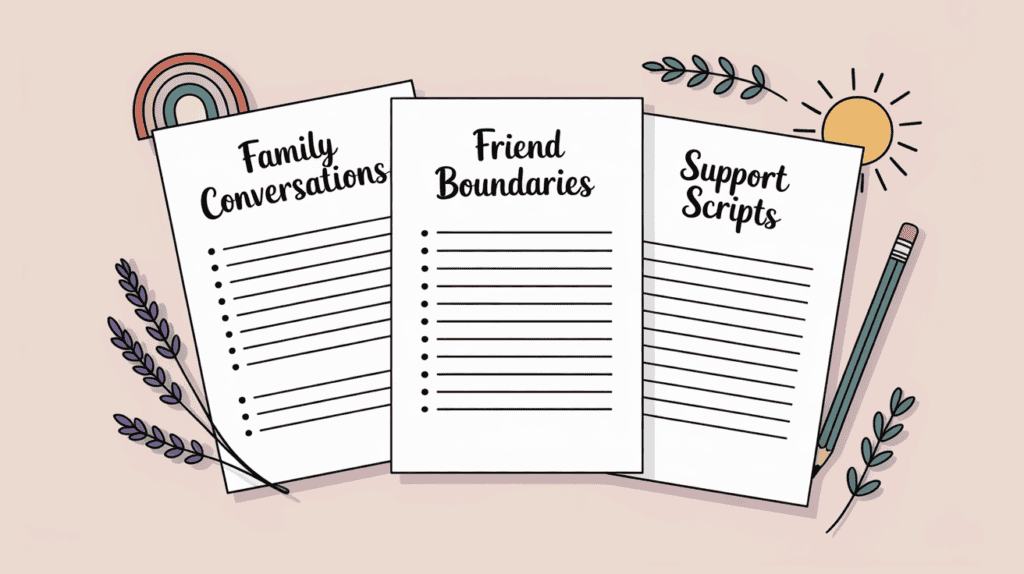
Having specific language ready can make boundary conversations feel less overwhelming. Here are some scripts tailored to different types of support relationships:
Boundaries with Your Primary Support Person
With your closest supporter, you can often be more detailed and collaborative:
“I’ve been thinking about what kinds of support feel most helpful to me right now. Could we talk about some guidelines that might help both of us?”
“I love that you want to support me. Here’s what would feel most supportive: [specific request]. And here’s what’s feeling overwhelming: [specific behavior].”
“I need you to know that when I’m processing difficult emotions, I’m not asking you to fix anything. I just need you to listen and remind me that my feelings make sense.”
“Could we create a signal for when I need to pause a conversation? Sometimes I get overwhelmed and need a break, but I don’t want you to take it personally.”
Family Member Boundary Conversations

Family boundaries often require acknowledging existing relationships while establishing new needs:
“I know our family has always shared everything, and I appreciate how close we are. Right now, I need to share pregnancy information more selectively. This isn’t about loving you less—it’s about protecting my emotional space during a vulnerable time.”
“I understand you’re excited and want to help. The way you can best support me right now is by [specific request] rather than [overwhelming behavior].”
“I need some boundaries around giving advice right now. I know you have good intentions, but what I need most is for you to trust that I’m making thoughtful decisions with my healthcare team.”
Friend and Extended Support Boundaries
With friends and broader support network members, you might need clearer, simpler boundaries:
“I’m so grateful you care about us. Right now, I’m being very selective about pregnancy discussions because of how vulnerable this time feels after our loss.”
“I appreciate you wanting to check in. What would help me most is [specific type of support] rather than [current approach].”
“I know you’re excited for us, and that means a lot. I need to ask you not to share our pregnancy news with anyone else right now.”
“I might not be as available for [social activities/phone calls/etc.] as usual. It’s not about our friendship—I just have less emotional energy available right now.”

Professional Support Boundaries
Even with healthcare providers and other professionals, boundaries are important:
“I need you to understand that this pregnancy feels very different from a typical pregnancy because of our previous loss. I need extra patience with my anxiety and questions.”
“I’m not ready to discuss [specific topic] yet. Can we focus on [current concern] for now?”
“I need clear information about what’s normal versus what needs attention, because my anxiety makes it hard to distinguish between the two.”
“I prefer to receive medical information in [specific way] because it helps me process it better.”
For guidance on finding the best possible care for your rainbow pregnancy, see:
➡️ Choosing the Right Healthcare Provider for Your Rainbow Pregnancy
➡️ A Rainbow Pregnancy Guide to Switching Healthcare Providers
Emergency Boundary Protocols
Sometimes you need immediate boundary enforcement:
“I need to stop this conversation right now. We can revisit it later when I’m feeling more able to engage.”
“This topic is too overwhelming for me today. Can we talk about something else?”
“I appreciate your concern, but I need space to process this on my own first.”
“I’m feeling overwhelmed and need to step back from support conversations for a few days. I’ll reach out when I’m ready.”
For clarity and encouragement around advocating for your needs, check out Episode 85: Choosing the Right Support: What to Look for in a Pregnancy After Loss of The Pregnancy After Loss Podcast. It explores how asking for support during a rainbow pregnancy is essential rather than selfish.

Moving Forward with Boundaries That Feel Right for You
What matters most when you are thinking about setting boundaries is giving yourself permission to create the emotional safety you need, even when that looks different from day to day.
The scripts and strategies we’ve covered here are starting points—ways to begin conversations about what you need. You can adapt them, modify them, or use them as inspiration for finding your own words (or throw them out the window, this is a you-do-you scenario).
If you find yourself dealing with more complex support challenges—like supporters who struggle with your boundaries, family members who push back, or situations where you need to step back from certain relationships—I’ve created a separate troubleshooting guide: When Support Relationships Get Complicated.
That resource covers the more nuanced scenarios that hopefully you won’t need, but it’s there if you do. I wanted to keep it separate because it can read like a bunch of exhausting emotional homework if you go through the whole thing.

If naming and gathering support feels overwhelming, my Support Circle Building Workbook can help. It walks you through how to:
Build a responsive, emotionally attuned support team
Identify safe people who get this journey
Create a plan to ask for specific types of help
But it is intended only for troubleshooting, not as a pile of work you need to do.
For a lot of people, the basics we’ve covered here—understanding your boundary needs, communicating them clearly, and adjusting as you go—will be enough to create more supportive relationships during this tender time.
You deserve support that honors both your grief and your hope, that respects your need for protection while helping you feel less alone.
If you’re looking for more structured guidance on building your entire support system, check out our Support Circle Workbook for the expectant parent. And for connection with others who understand this delicate balance of needing support while protecting your heart, join our private Facebook group for rainbow parents-to-be.
Your boundary needs are valid. Your emotional safety matters. And creating the support you need is an act of self-care, not selfishness.
If you’re still struggling with people pushing back on your boundaries or feeling unsupported, I’ve written a follow-up guide on how to troubleshoot support relationships when your boundaries aren’t being respected.

Before you go, I want to reiterate VERY CLEARLY that I am neither a Medical Health Care Provider nor a Mental Health Care Provider. Nothing I have written here should be taken as medical advice. PLEASE seek help from a professional if you have any questions or concerns about your pregnancy or your emotional state.
Please Pin One of the Images Below, It’s a BIG Help for My Blog!
Thank you!

Hi!
I’m Jess,
the heart behind The Thing About Rainbows. After experiencing the profound loss of a pregnancy and the journey that followed, I created this space to support and guide women through similar challenges. I am so glad you found your way here. You are not alone.


One Comment