
Why Birth Planning Feels Different During Pregnancy After Loss
An exploration of the unique challenges and emotions that come with planning for birth when you’ve experienced pregnancy loss
When my midwife first mentioned creating a birth plan around 30 weeks, I felt this strange mix of panic and numbness wash over me.
Part of me knew this was normal pregnancy milestone stuff. But another part of me couldn’t quite believe we were actually talking about birth – like really talking about it, as if this baby was definitely coming home with us.
Maybe you’re feeling something similar. Maybe the idea of birth planning feels simultaneously too scary and too hopeful. Maybe you’ve noticed that the birth planning advice everywhere seems to assume a kind of confidence and excitement that feels foreign to your experience right now.
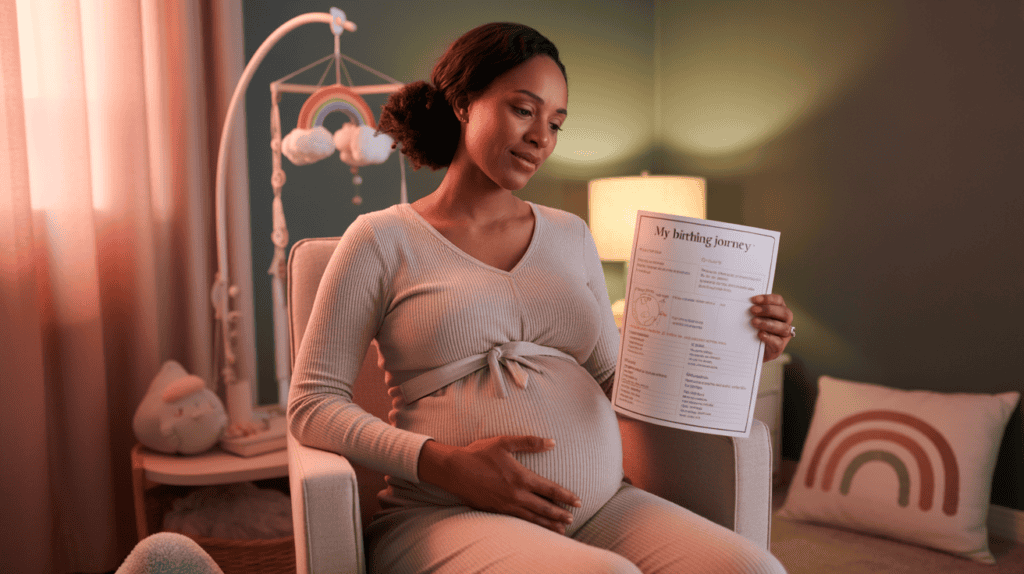
If any of this resonates, you’re not alone. Birth planning during pregnancy after loss carries a weight and complexity that most resources never acknowledge. The fears are different. The hopes feel more fragile. Even the practical considerations involve layers that others might not understand.
There’s nothing wrong with how you’re responding to birth planning right now. Whether you’re avoiding it entirely, diving into research as a way to feel control, or bouncing between both extremes, your response makes complete sense given what you’ve been through.
So let’s talk about why birth planning feels so uniquely challenging during pregnancy after loss – not to make it feel easier (that might not be possible), but to help you understand that your experience is both normal and valid.
Table of Contents
A Quick Disclaimer
Before we move on I want to state VERY CLEARLY that I am neither a Medical Health Care Provider nor a Mental Health Care Provider. Nothing I write here should be taken as medical advice. I am simply here to share my own experiences in the hope it will help someone feel less alone, and possibly avoid some of the mistakes I made along the way.
If you have any questions or concerns about your pregnancy or your emotional state, PLEASE seek help from a professional.
The Planning Paradox in Birth
You know how pregnancy preparation can feel like this impossible tension between needing to prepare and being afraid to hope? That same dynamic shows up intensely around birth planning.
There’s this strange push and pull that happens – between the practical things that need to happen and our emotional capacity to engage with them.
This is what I often refer to as the Rainbow Pregnancy Preparation Paradox. And today we are talking about a subcategory of that: the birth planning paradox.

For me, this showed up as complete avoidance of anything that made birth feel real. I couldn’t even think about labor positions or pain management without feeling like I was somehow tempting fate.
The idea of creating a detailed birth plan felt almost presumptuous, like I was assuming too much about the outcome.
Maybe you’re experiencing something similar. Or maybe you’re finding yourself on the other end of the emotional response spectrum or somewhere in between.
Whatever you’re experiencing, there’s nothing wrong with your response.

Struggling to figure out what kind of support you need during your rainbow pregnancy? My free Rainbow Pregnancy Support Quiz can help. It walks you through how to:
✔️Discover your unique support style and preferences
✔️Identify specific types of help that would feel most valuable
✔️Create clarity around your needs without emotional overwhelm
The Hope-Protection Conflict
Here’s the thing about birth planning after loss: it requires imagining a future where you hold your baby. And if you’ve previously experienced loss, that kind of imagining can feel genuinely terrifying.
Every birth plan component – from location preferences (hospital, birth center, home, etc.) to who you want in the room – assumes you’ll reach a point where those decisions matter. It assumes your baby will be born alive and you’ll need to navigate the experience of meeting them.
After loss, that assumption doesn’t feel safe anymore.
You cannot unlearn that pregnancy is not equal to baby.

Planning implies expectation of a positive outcome. And positive expectations, however small, can feel dangerous when you’ve learned that hoped-for outcomes don’t always happen.
This creates an impossible situation: you might need some preparation to feel ready, but preparation requires hope, and hope feels risky.
That emotional conflict is well-supported in research: parents pregnant after perinatal loss often report heightened anxiety, depression, unresolved grief, and continual fear of recurrence.
The Control-Surrender Tension
Birth inherently involves a surrender of control. Your body will do what it needs to do. Your baby will come when they’re ready. Medical situations may arise that require quick decisions.
But in a pregnancy after loss, control feels essential for emotional survival.
The desire to plan every detail makes complete sense when you’ve experienced the ultimate loss of control. At the same time, detailed planning can feel like an attempt to control something that’s fundamentally uncontrollable.
This tension can make birth planning feel simultaneously necessary and futile.

The Present-Future Split
Staying present often feels safer during pregnancy after loss. Focus on today’s heartbeat, this week’s appointment, the current moment where everything is okay.
Birth planning requires future-focused thinking. It asks you to project forward to labor, delivery, and those first moments with your baby.
For many of us, that kind of future thinking triggers anxiety. What if we plan for something that doesn’t happen? What if getting a glimmer of what life would be like with our babies opens a door to hope we can’t close again?
These tensions are real and valid responses to pregnancy after loss.
You don’t need to resolve them or choose sides – it’s completely normal to feel caught between hope and protection, control and surrender, present and future.
Recognizing these conflicts doesn’t make them go away, but it can help you understand that your complicated feelings about birth planning make perfect sense.
Whatever approach helps you navigate these tensions – detailed planning, minimal planning, or something in between – is the right approach for you.

Why Traditional Birth Planning Advice Falls Short
Most birth planning resources assume excitement about birth and confidence in positive outcomes. They’re written for people who see pregnancy as a natural progression toward parenthood.
That assumption creates a significant gap for those of us planning births after loss.
“Just relax and trust your body”
This advice is everywhere in birth planning materials. But after loss, the relationship with your body and trust in outcomes becomes much more complex.
You’ve experienced firsthand that sometimes pregnancies don’t continue despite doing everything “right.” You know that medical care, while excellent, cannot prevent every possible outcome. After loss, many people find themselves feeling disconnected from or wary of their bodies, even though their loss was not their body’s fault.
The simple instruction to “trust your body” can feel naive when you’re carrying the hard-earned knowledge that pregnancy doesn’t always end with a baby to bring home – knowledge that others simply don’t have.
“Relaxation” advice can feel dismissive of this very real shift in perspective that comes after experiencing loss.
“Focus on your ideal birth experience”
Traditional birth planning often starts with envisioning your perfect birth scenario. What would labor look like in an ideal world? How do you want to feel? What experience do you want to create?
I find this advice ridiculous whether you have experienced loss or not.
This advice assumes you naturally know what all the possibilities are. But birth involves so many variables that you may have never encountered or even heard of.
Even if you’ve given birth before, every birth is different, and there may be options, complications, or decisions you’ve never considered.

The pressure to envision an “ideal” scenario when you’re acutely aware of how much you don’t know can feel overwhelming rather than inspiring.
And if you have experienced loss, ideal scenarios can also feel dangerous to imagine. Your previous “ideal” pregnancy may have ended in loss. Hoping for ideal outcomes can feel like setting yourself up for disappointment.
Instead of inspiration, this advice can trigger anxiety about both expecting too much and not knowing enough to plan properly.
A safer place to start is usually identifying what you know you don’t want. It pulls from your existing knowledge of how birth might go and it also feels a little less like planning.
“Don’t worry about worst-case scenarios”
Standard birth planning advice often discourages “negative thinking” about complications or challenging outcomes.
But worst-case scenarios have already happened to you. Ignoring possibilities feels naive and unsafe rather than optimistic.
You may need to plan for multiple outcomes to feel emotionally prepared, and that’s not pessimism – it’s wisdom.
Timeline Pressure
Most birth planning follows predictable timelines: start thinking about preferences in the second trimester, finalize plans by 36 weeks, pack your hospital bag by your due date.
These timelines assume emotional readiness follows gestational age. They don’t account for the reality that our capacity for planning can be unpredictable and non-linear.

You might not feel ready to engage with birth planning until much later than “typical” timelines suggest. Or you might need to start earlier because planning helps you feel more prepared, or because you know you will need to take breaks. Both approaches are completely valid.
If traditional birth planning advice leaves you feeling frustrated, misunderstood, or more anxious than prepared, that makes complete sense. Those approaches weren’t designed with your experience in mind.
The next time someone offers you birth planning advice that feels tone-deaf to your experience, you have my permission to smile and nod while internally rolling your eyes.
Your birth planning needs are different, and that’s not something you need to apologize for or try to fit into someone else’s framework.
However, if this kind of dismissive advice is coming from your healthcare provider, that’s a different situation entirely. You deserve medical care from someone who understands how loss affects your current pregnancy needs.
If your provider consistently offers advice that makes you feel unheard or misunderstood, it might be time for a conversation about what you need to feel safe – or a conversation about whether this provider is the right fit for your rainbow pregnancy.
For guidance on finding loss-aware providers and having these important conversations, check out:
➡️ Choosing the Right Healthcare Provider for Your Rainbow Pregnancy
➡️ A Rainbow Pregnancy Guide to Switching Healthcare Providers

Are you feeling unsure about how to choose the right healthcare provider for your Rainbow Pregnancy?
Our free Provider Compatibility Guide for rainbow pregnancy gives you the tools to simplify your search and feel confident in your choice. With reflective prompts, actionable tips, and a quick-reference checklist, this guide helps you focus on what matters most and find a provider who aligns with your needs.
Get your free guide now and take the first step toward a supported rainbow pregnancy experience.
Different Ways Birth Planning Shows Up In Pregnancy After Loss
There’s no single way that your previous loss experience(s) affects birth planning. Your response might look different from others, and it might even change throughout your pregnancy.
The Avoiders
Some people find they simply cannot engage with birth planning at all. The entire concept feels too triggering, too presumptuous, or too overwhelming.
This was me, y’all, and I was GOOD AT IT. I avoided with the best of them.
If this is you, too, you might feel like planning invites disappointment. You might prefer to “see what happens” rather than create expectations. You might feel guilty for not planning but unable to push through that emotional barrier.
This approach often serves an important protective function. It allows you to stay present and avoid anxiety-provoking future thinking.
The Over-Planners
Others find themselves creating extremely detailed birth plans, researching every possible scenario, and trying to anticipate every decision that might need to be made.
If this is you, planning might feel like the only way to manage anxiety about birth. Detailed preparation might help you feel some sense of control in an inherently uncontrollable situation.
This approach often represents an attempt to prevent being surprised or unprepared, which makes complete sense after experiencing an unexpected loss.

The Switchers
Many people find their capacity for birth planning changes day to day or week to week. You might spend hours researching pain management options one day, then feel unable to think about birth at all the next day.
If this is you, you might start birth plans but never finish them. You might feel frustrated by your inconsistent engagement with planning.
This response reflects the reality that emotional capacity fluctuates during pregnancy after loss. Some days you have space for future thinking, others you need to focus on just getting through the present moment.
The Minimalists
Maybe you are somewhere in between. You’re not an avoider, and you do want a basic birth plan, but detailed planning feels like too much. You might prefer to focus only on the absolute essentials while leaving everything else flexible.
If this is you, you might seek a middle ground between no planning and comprehensive planning. You want some preparation without overwhelming complexity.
This approach often represents a balance between needing some control and recognizing the limits of what planning can actually achieve.
I was pretty hard on myself about my avoidance. I berated myself constantly and often tried to force myself to handle things differently.
But all of that only added to my anxiety. And I am also stubborn enough that trying to force a new reaction made me dig my heels in even harder.
It is my hope that seeing yourself in one of these approaches might help you stop judging your response to birth planning and start supporting it instead. Your planning style isn’t a personality flaw or something to overcome – it’s information about what you need right now.
Understanding your approach helps you communicate your needs to your partner, support team, and provider, and helps you choose planning strategies that work with your natural responses rather than against them.
What Makes Birth Planning Different This Time
Beyond the emotional complexity, birth planning during pregnancy after loss involves practical considerations that others might not face.

Grief Integration
You might want to find ways to honor your angel baby(ies) during birth. This could mean wearing memorial jewelry, bringing photos, or taking a moment to acknowledge your angel before meeting your rainbow baby.
Traditional birth planning resources don’t address how to create space for both grief and joy during labor and delivery.
Medical Considerations
Your loss history might affect medical recommendations for this birth. You might need additional monitoring, have different risk factors to consider, or want to avoid procedures that were part of your previous loss experience.
These medical layers add complexity to birth planning that goes beyond typical preference-setting.
Support System Dynamics
The people around you might be carrying their own anxiety about birth after your loss. Your partner might have trauma responses. Family members might be nervous about getting too excited. Friends might not know how to support you.
This affects who you include in birth planning and how you prepare your support team for birth.
If you could use some guidance on support building, see:
➡️ Creating Your Rainbow Pregnancy Support Circle
➡️ Finding Your Initial Support Person for Rainbow Pregnancy
Or check out my Rainbow Pregnancy Support Building Workbooks:

If naming and gathering support feels overwhelming, my Support Circle Building Workbook can help. It walks you through how to:
Build a responsive, emotionally attuned support team
Identify safe people who get this journey
Create a plan to ask for specific types of help
Emotional Preparation vs. Logistical Preparation
Traditional birth planning focuses heavily on logistics: where to labor, what pain management to use, who to call when labor starts.
Birth planning after loss often requires equal attention to emotional preparation: how to handle trauma responses during labor, what support looks like when grief and joy coexist, how to maintain your voice when fear feels overwhelming.
The expanded definition of birth planning includes medical preferences plus emotional support strategies, communication protocols that honor your history, plans that acknowledge grief alongside hope, and frameworks that can adapt as your needs change.
Finding Your Path Forward
Understanding why birth planning feels different doesn’t automatically make it easier, but it can help you approach the process with more self-compassion and realistic expectations.
Whatever it may look like, your response to birth planning reflects your wisdom about what you need to feel emotionally safe right now.
Whether that’s detailed preparation, complete avoidance, or something in between, it’s information about how you’re protecting yourself during a vulnerable time.
There’s no timeline you need to follow, no level of detail that’s required, no “right” way to approach birth planning after loss.

What matters is that however you choose to think about birth honors both your need for protection and any preparation that helps you feel ready.
Some people find it helpful to start with the smallest possible step – maybe just thinking about who they’d want with them during labor.
Others prefer to research extensively as a way to feel more prepared. Still others decide to focus on building trust with their provider and leaving most decisions for the moment.
All of these approaches can lead to positive birth experiences.
Your birth planning doesn’t have to look like anyone else’s. It doesn’t have to match your expectations from before your loss. It doesn’t have to satisfy other people’s ideas about what “good” preparation looks like.
It just needs to serve you and your unique situation.
The fact that you’re even considering birth planning – that you’re reading this post, thinking about these questions – represents hope. It shows that despite the protection and fear that loss naturally creates, part of you is preparing for the possibility of bringing your baby home.
That hope, however small or cautious, is a form of courage. And whatever birth planning approach grows from that hope will be exactly what you need.
Looking for more support with birth planning during pregnancy after loss? You might find these resources helpful:
- For permission-giving around different planning approaches: Permission to Plan (Or Not Plan) Your Rainbow Birth
- For practical guidance on birth plan basics: Birth Plan Basics: What Actually Matters in Pregnancy After Loss
- For working with fear and anxiety: Navigating Birth Fears in Pregnancy After Loss
There’s no wrong way to approach birth planning after loss. Whatever feels right for you is the right approach.
If you’d like to connect with others who understand that birth planning after loss is complicated, emotional, and completely different from ‘typical’ pregnancy planning, our private Facebook group is a safe space where your feelings about birth planning – whatever they are – make perfect sense to everyone there.

Before you go, I want to reiterate VERY CLEARLY that I am neither a Medical Health Care Provider nor a Mental Health Care Provider. Nothing I have written here should be taken as medical advice. PLEASE seek help from a professional if you have any questions or concerns about your pregnancy or your emotional state.
Please Pin One of the Images Below, It’s a BIG Help for My Blog!
Thank you!


Hi!
I’m Jess,
the heart behind The Thing About Rainbows. After experiencing the profound loss of a pregnancy and the journey that followed, I created this space to support and guide women through similar challenges. I am so glad you found your way here. You are not alone.


